
 By Emma Ellis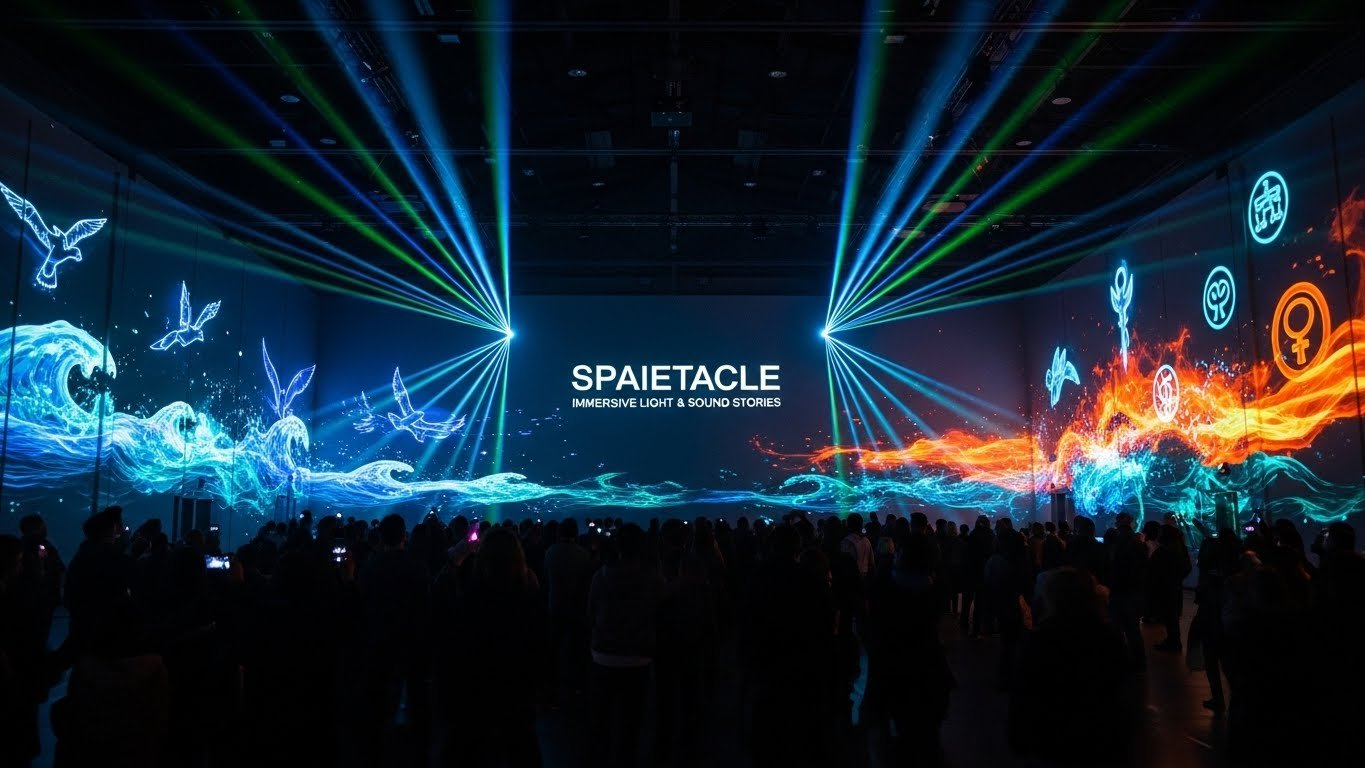
In an age where audiences crave deeper engagement rather than passive consumption, immersive experiences are redefining how people interact with art, culture, and physical spaces. At the forefront of this creative evolution is Spaietacle, a concept that transforms ordinary environments into extraordinary, story-driven experiences through the powerful fusion of light, sound, and co-creation. More than a visual installation or a performance, Spaietacle invites visitors to step inside a living narrative—one where they become participants rather than spectators.
Understanding the Concept of Spaietacle
Spaietacle is built on the idea that space itself can tell stories. By blending architectural elements with dynamic lighting, layered soundscapes, and interactive storytelling, Spaietacle turns physical locations into immersive worlds. Whether set in galleries, public spaces, historical sites, or temporary installations, each Spaietacle experience is designed to awaken curiosity and emotional connection.
Unlike traditional exhibitions that rely on static displays, Spaietacle environments evolve in real time. Lights shift in response to movement, sounds adapt to audience presence, and narratives unfold differently depending on how visitors explore the space. This adaptive nature ensures that no two experiences are exactly the same.
The Role of Light in Shaping Immersion
Light is one of the most powerful storytelling tools in Spaietacle. Carefully programmed illumination can transform mood, perception, and emotional tone instantly. Soft glows may evoke calm and wonder, while sharp contrasts and moving beams can create tension or excitement.
In Spaietacle installations, light is not merely decorative—it acts as a narrative guide. Pathways are revealed through illumination, hidden details emerge as lights change, and story beats are punctuated by shifts in color and intensity. By choreographing light with precision, creators shape how visitors move through and interpret the space.
Sound as an Emotional Anchor
If light sets the scene, sound gives it depth and emotion. Spaietacle uses layered audio elements such as ambient soundscapes, subtle musical motifs, spoken word, and reactive audio cues to build atmosphere. These sounds often respond to movement, proximity, or interaction, making visitors feel surrounded by the story.
Sound in Spaietacle is designed to be felt as much as heard. Low frequencies can create a sense of scale and immersion, while delicate tones can draw attention to specific moments or objects. By engaging the auditory senses fully, Spaietacle enhances memory, emotional resonance, and overall impact.
Co-Creation: Turning Visitors into Participants
One of the defining features of Spaietacle is co-creation. Instead of delivering a fixed narrative, Spaietacle empowers visitors to influence the experience. Their choices, movements, and interactions shape how the story unfolds.
This participatory approach fosters a sense of ownership and connection. Visitors are no longer passive observers; they are collaborators within the creative process. Through interactive elements such as motion sensors, touch-responsive surfaces, or digital interfaces, Spaietacle blurs the boundary between creator and audience.
Storytelling Beyond Words
Traditional storytelling relies heavily on text or dialogue, but Spaietacle embraces a multisensory narrative language. Stories are communicated through visual symbolism, spatial design, sound cues, and emotional pacing rather than explicit explanations.
This approach allows Spaietacle experiences to transcend language and cultural barriers. Visitors from different backgrounds can interpret and connect with the story in their own way, making the experience both personal and universal. The emphasis is not on a single correct interpretation but on exploration and emotional discovery.
Transforming Physical Spaces
Spaietacle excels at reimagining spaces that people may otherwise overlook. Empty warehouses, historic buildings, urban streets, and natural landscapes can all become stages for immersive storytelling. By layering digital and sensory elements onto physical environments, Spaietacle reveals new dimensions of familiar places.
This transformation often highlights the hidden narratives of a space—its history, cultural significance, or future potential. Through light and sound, walls seem to speak, floors guide movement, and ceilings expand perception. The space itself becomes an active character in the story.
Applications Across Industries
The versatility of Spaietacle makes it valuable across multiple fields:
-
Art and Culture: Museums and galleries use Spaietacle to bring exhibits to life, encouraging deeper engagement.
-
Entertainment: Festivals, performances, and themed experiences adopt immersive storytelling to captivate audiences.
-
Education: Interactive environments enhance learning by making complex topics experiential and memorable.
-
Brand Experiences: Companies use Spaietacle to create emotionally resonant brand activations that leave lasting impressions.
-
Urban Design: Public installations foster community interaction and re-energize shared spaces.
Emotional Impact and Memory
What sets Spaietacle apart is its ability to create lasting emotional memories. Immersive experiences engage multiple senses simultaneously, which strengthens emotional response and recall. Visitors often remember not just what they saw, but how they felt within the space.
This emotional depth is intentional. By aligning light, sound, and story rhythm, Spaietacle experiences guide visitors through moments of curiosity, reflection, excitement, and connection. These emotional journeys are what transform a temporary installation into a meaningful experience.
Technology as an Enabler, Not the Focus
While advanced technologies such as projection mapping, spatial audio, sensors, and AI often power Spaietacle, technology is never the main attraction. Instead, it acts as an invisible enabler that supports storytelling and immersion.
The success of Spaietacle lies in how seamlessly technology integrates with creative vision. When executed well, visitors are not thinking about how the experience works—they are simply absorbed in the story unfolding around them.
The Future of Immersive Storytelling
As audiences increasingly seek meaningful, interactive experiences, concepts like Spaietacle represent the future of storytelling. The shift from passive viewing to active participation reflects broader cultural changes in how people connect with content, spaces, and each other.
Future Spaietacle experiences may incorporate more adaptive narratives, deeper personalization, and stronger community involvement. As technology evolves, so will the possibilities for immersion—but the core philosophy will remain the same: using sensory storytelling to create connection.
Why Spaietacle Matters
In a world saturated with screens and digital noise, Spaietacle brings people back into shared physical experiences enriched by creativity and emotion. It reminds us that stories are not only told—they are lived, felt, and discovered through space and sensation.
By transforming environments into immersive narratives, Spaietacle challenges how we perceive art, storytelling, and interaction. It invites curiosity, encourages exploration, and proves that when light, sound, and human participation come together, spaces can truly come alive.
Conclusion
Spaietacle: Immersive Light & Sound Stories represents a powerful evolution in experiential design and storytelling. By blending sensory elements with co-creation and spatial transformation, it creates experiences that are personal, emotional, and unforgettable.