
 By Emma Ellis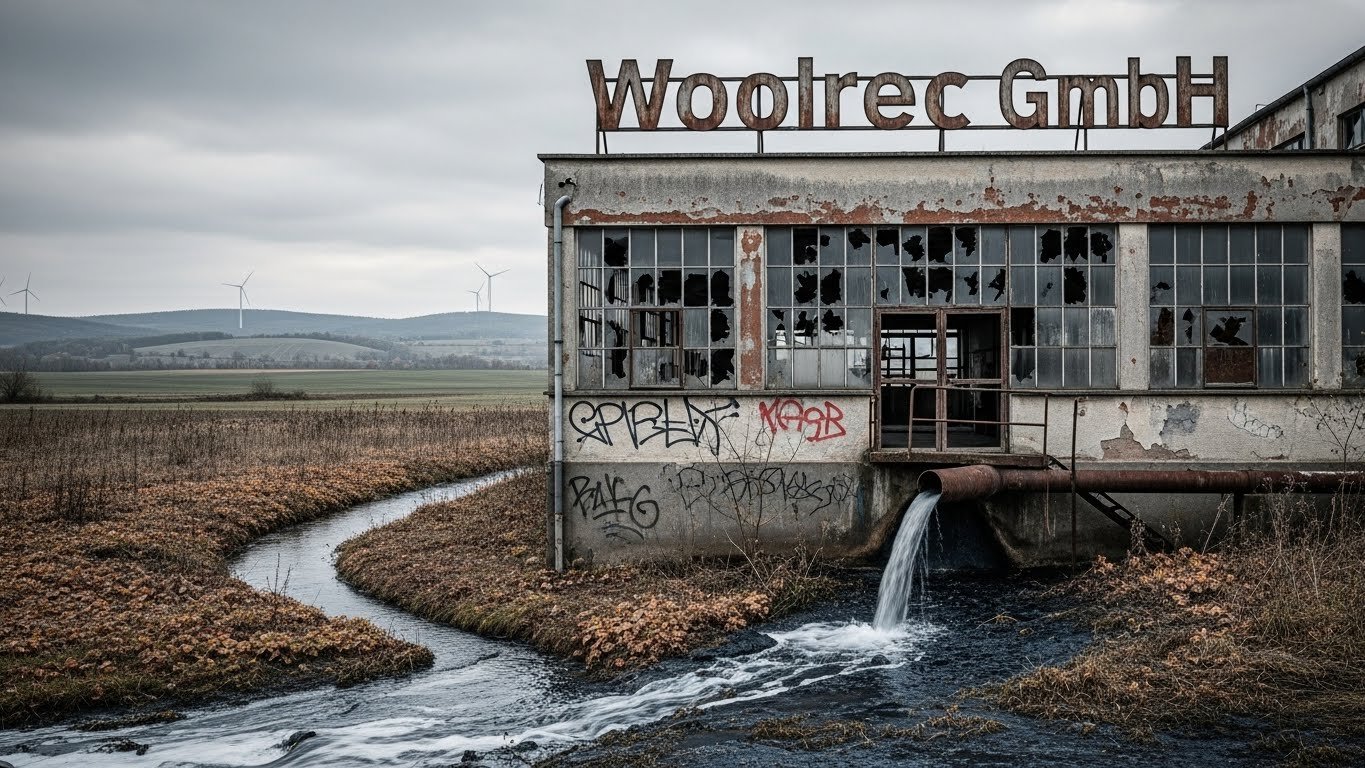
The Woolrec scandal remains one of the most striking environmental controversies in recent German industrial history. What began as an ostensibly innovative recycling company in Mittelhessen quickly transformed into a case study in environmental mismanagement, regulatory failure, public mistrust and legal reckoning. The story of Woolrec demonstrates how recycled materials — when mishandled — can create far more harm than good, and why transparency, scientific rigor, and community engagement are essential in waste processing industries. Wikipedia
Beginnings: The Promise of a New Recycling Era
Woolrec was founded in 2002 in Tiefenbach, in the Lahn-Dill district of Middle Hesse, Germany. The company positioned itself as a pioneer in handling difficult waste streams by recycling hazardous mineral fiber waste — a by-product of the construction and insulation industries. The idea was simple: turn potentially dangerous waste into a valuable additive called “Woolit” that could improve the strength and performance of brick and tile products in the building sector. Wikipedia
The German Federal Ministry for the Environment saw potential in Woolrec’s concept. The fledgling enterprise received environmental innovation funding of €550,000, underscoring the government’s interest in supporting eco-friendly technologies that could help reduce industrial waste and promote a circular economy. At the time, Woolrec seemed poised to make a positive environmental impact. Wikipedia
However, the promise of innovation soon collided with mounting concerns from residents and local observers.
Early Warnings and Public Concern
Almost from the start, anxious neighbors in Tiefenbach raised serious concerns about the company’s operations. Because Woolrec was processing mineral fibers that can be classified as carcinogenic or toxic, residents feared that airborne fibers and dust might pose health risks. Local citizens regularly protested and demanded better oversight — but for years, these concerns were met with cautious responses from authorities rather than decisive action. FR.de
Some critics claimed that the plant’s activities were underreported, and residents even accused regulatory agencies of insufficient monitoring. The local government and Regierungspräsidium Gießen (the regional authority responsible for environmental oversight) insisted that they were tracking Woolrec’s compliance and frequently inspecting the facility. Still, many in the community felt unheard and dismissed, which helped fuel mistrust long before the scandal broke publicly. FR.de
The Woolit Product: Innovation or Illusion?
Central to the controversy was Woolrec’s signature product — Woolit. The company touted it as a safe, innovative additive made from recycled mineral fibers mixed with clay and organic binders like molasses. According to Woolrec, this material could be introduced into brickmaking, where the high temperatures of kiln firing would lock fibers into a harmless matrix. Wikipedia
But investigative journalism and independent analysis began to undermine this narrative.
In 2012, the Hessischer Rundfunk (HR) — a regional public broadcaster — reported that an analysis by the Fresenius Institute, a respected German testing organization, classified samples of Woolit as carcinogenic, contradicting the company’s assurances. Furthermore, Woolit had already been supplied to a brick factory in Olfen, North Rhine-Westphalia, where similar concerns were raised after testing showed dangerous substances in the material. Production at that facility was subsequently halted. Wikipedia
Worse yet, subsequent inquiry revealed that the production processes Woolrec had described to authorities were not real at all. Instead of safely transforming hazardous fibers into benign structural additives, the company had allegedly merely ground up dangerous waste into powder and mixed it with gelatin from a supermarket to create a product they called Woolit. There was little evidence that the complex chemical transformation they claimed was ever carried out. Wikipedia
Regulatory Scrutiny and Shutdown
The escalating controversy drew mounting regulatory attention. Initially, Regierungspräsidium Gießen continued to support the company’s operations, pending more definitive evidence. But when toxic dioxins were found on the Woolrec site in September 2012 — and the media spotlight intensified — authorities moved swiftly to halt operations. FR.de
Contaminated soils, potential airborne hazards, and the continued doubts about what exactly was happening on the factory floor convinced officials to order a suspension of production. Woolrec’s processes were no longer legal under German environmental law, and the facility was effectively closed. Wikipedia
Some proponents pleaded for thorough testing before a final ruling, and legal pushback followed. But by early 2013, the production site had been completely cleared, and the operations that once promised an environmental breakthrough had become a cautionary tale. FR.de
Legal Fallout: Prosecution and Contested Verdicts
The demise of Woolrec’s operations did not end the story. In the following years, German prosecutors pursued legal action against key figures associated with the company. In 2014, the State Prosecutor’s Office in Gießen filed charges against Woolrec’s founder and a consulting expert who had repeatedly certified Woolrec’s processes as safe despite mounting evidence to the contrary. They were charged with illegal handling of hazardous waste in over 50 instances, a serious environmental crime under German law. FR.de
The high-profile trial began in January 2018 at the Landgericht Gießen, Germany’s regional court, and detailed testimony from regulators, scientists, and residents painted a troubling picture of alleged negligence, corporate secrecy and administrative misjudgment. Prosecutors argued that the defendants had acted out of profit rather than environmental stewardship — a charge that increases the severity of the offense under German legal standards. FR.de
In October 2019, a lower court convicted both defendants and imposed significant fines. However, in August 2021, the Federal High Court of Justice (Bundesgerichtshof) overturned those convictions on procedural grounds — citing errors such as not properly considering the statute of limitations and mistakes in the composition of the trial panel — and remanded the case to be retried. This means the legal reckoning over Woolrec’s activities remained unresolved in the courts for years after the plant’s closure. Wikipedia
Community Impact and Continuing Debate
The Woolrec scandal has lingered in public consciousness, especially among residents of Tiefenbach and surrounding communities. Even years after the closure, local watchdog groups and environmental activists have continued to express concern about long-term environmental and health impacts from both the materials processed and the handling of waste at the site. Some independent documentaries and investigative reports contend that the official regulatory response was slow, inadequate, or overly influenced by industry constraints. FR.de
The scandal also ignited debate in the Hessian parliament and drew criticism from political parties calling for fuller transparency and stronger environmental safeguards. Some observers argued that regulatory authorities were too deferential to Woolrec, even as evidence of potential harm was mounting. Others suggested clearer legal frameworks are needed to monitor emerging recycling technologies before they are widely deployed. FR.de
Lessons and Legacy
The Woolrec case’s legacy is not simply about one company’s failure — it highlights larger structural issues within environmental governance, industrial innovation, and public accountability in Germany and beyond:
-
Innovation Requires Scrutiny: A novel recycling solution may be environmentally beneficial in theory, but without transparent verification it can become dangerous. The Woolrec case underscores why independent testing and rigorous scientific validation should be integral to environmental approvals. Wikipedia
-
Community Vigilance Matters: Local residents often have valuable insights into environmental impacts long before regulators act. In Woolrec’s case, public protests and citizen science helped catalyze deeper inquiry. FR.de
-
Regulatory Systems Must Evolve: The staggered timeline and legal complexities of the Woolrec case reveal weaknesses in how environmental oversight bodies handle emerging technologies and complex waste streams. Strengthening these systems remains a priority for German authorities. FR.de
-
Legal Precedents Are Still Shaping Future: Because courts overturned early convictions on procedural grounds, the Woolrec scandal continues to be a reference point in debates about environmental crime prosecution and responsibility. Wikipedia
Conclusion
The Woolrec affair stands today as more than an industrial anomaly; it is a sobering reminder that recycling and sustainability — though essential goals — are not inherently safe or ethical without transparency, oversight, and accountability. Woolrec’s trajectory from promising innovator to environmental pariah represents the complexity of balancing technological aspiration with public health and environmental protection.
As Germany continues its transition toward a circular economy, the scandal serves both as a caution and a call to action: meaningful environmental innovation must always be paired with the highest standards of safety, science, and community trust.