
 By Emma Ellis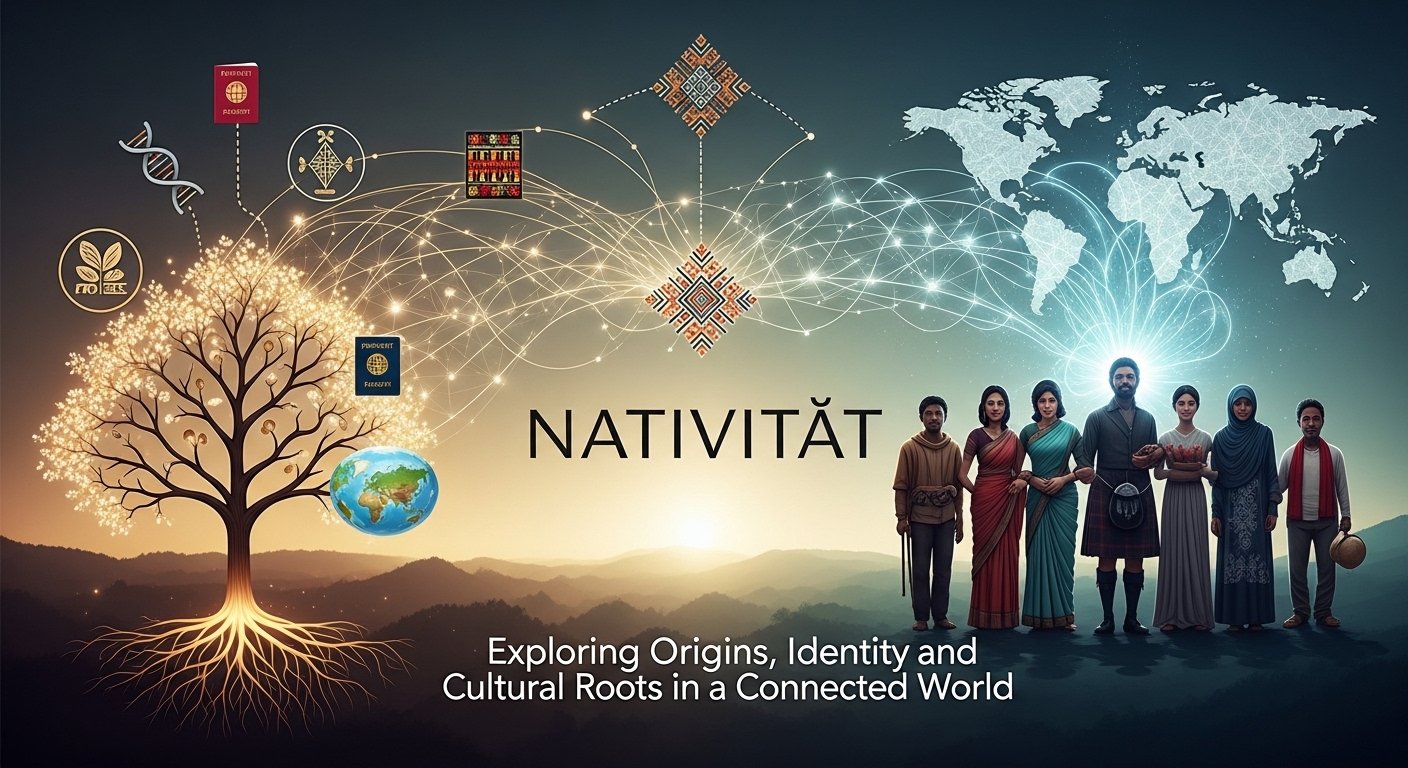
In an age defined by globalization, digital communication, and rapid migration, questions of identity and belonging have become more significant than ever. People today are more connected across borders, cultures, and traditions than at any other time in history. Yet, despite this interconnectedness, the desire to understand one’s origins and cultural foundations remains strong. This deep exploration of heritage and identity is beautifully captured in the concept of Nativität.
Derived from the German word meaning “nativity” or “birth,” Nativität goes beyond the simple idea of birthplace. It represents a broader reflection on origins, identity, cultural heritage, and the influences that shape who we are. In a connected world where cultures blend and evolve, Nativität invites individuals and societies to rediscover their roots while embracing global unity.
This article explores the meaning of Nativität, its cultural and philosophical significance, its role in modern identity formation, and how it continues to shape communities in today’s interconnected era.
Understanding the Meaning of Nativität
At its simplest level, Nativität refers to birth or origin. Historically, the word is often associated with religious contexts, especially in Europe, where it refers to the nativity or birth of significant figures. For example, in Christian tradition, the Nativity commonly refers to the birth of Jesus Christ, symbolized during Christmas celebrations.
However, beyond religious interpretation, Nativität has a much broader meaning. It encompasses:
-
Place of birth
-
Cultural background
-
Language and traditions
-
Family heritage
-
Historical influences
-
Social environment
It represents the foundation upon which personal and collective identity is built.
Identity in a Globalized World
The 21st century has dramatically reshaped how individuals experience identity. Migration, travel, international education, and digital communities have blurred traditional boundaries. A person may be born in one country, raised in another, and work in a third while engaging daily with people worldwide online.
In such circumstances, identity becomes layered and dynamic. Nativität helps anchor this complexity. It reminds individuals of their starting point — the cultural and social influences that formed their earliest understanding of the world.
Rather than being restrictive, Nativität can serve as a grounding force. It allows individuals to explore new environments confidently while staying connected to their heritage.
Cultural Roots and Their Significance
Cultural roots shape values, beliefs, traditions, and behaviors. From childhood stories and family rituals to local festivals and traditional cuisines, these elements create a sense of belonging.
Understanding one’s Nativität provides:
1. A Sense of Belonging
Knowing where one comes from fosters emotional security and pride. It strengthens family and community bonds.
2. Cultural Continuity
Heritage carries traditions across generations. Language, art, music, and customs survive when individuals honor their origins.
3. Personal Confidence
Individuals who understand their background often feel more confident in multicultural environments because they know who they are.
4. Emotional Stability
In times of change or crisis, cultural roots provide comfort and familiarity.
In a rapidly changing world, these benefits are invaluable.
Nativität and Language
Language is one of the strongest markers of identity. A person’s native language shapes thought patterns, emotional expression, and communication style. Even when individuals become fluent in other languages, their mother tongue often remains closely tied to their sense of self.
In multilingual societies, Nativität can include multiple linguistic identities. For example, someone raised in a bilingual household may feel equally connected to both languages.
Preserving native languages is also critical at a societal level. Many indigenous languages face extinction due to globalization. Efforts to revive and protect them reflect the importance of safeguarding Nativität in its linguistic form.
Migration and the Evolution of Identity
Migration has always been part of human history. However, modern migration patterns are more visible and widespread than ever before.
For migrants and diaspora communities, Nativität can become both a source of pride and a complex emotional experience. Individuals may feel torn between their country of origin and their adopted homeland.
Second- and third-generation immigrants often navigate hybrid identities. They may celebrate traditional customs at home while adapting to new cultural norms in society.
Rather than viewing this duality as conflict, Nativität can be understood as evolving. Identity does not remain static. It grows, adapts, and integrates new influences while retaining foundational roots.
Digital Age and Cultural Expression
Social media and digital platforms have transformed how people connect with their heritage. Individuals now share traditional recipes, clothing, music, and folklore globally. Cultural pride is expressed through online communities that transcend geographical boundaries.
This digital exchange strengthens Nativität in several ways:
-
It connects diaspora communities worldwide
-
It allows cultural education beyond physical borders
-
It preserves traditions through digital archives
-
It fosters intercultural dialogue
At the same time, digital globalization also challenges cultural uniqueness. Western media dominance, for instance, can overshadow local traditions. Maintaining Nativität requires conscious effort to balance global engagement with local preservation.
Nativität and National Identity
On a larger scale, Nativität influences national identity. Nations often define themselves through shared history, language, symbols, and collective memory.
National celebrations, independence days, historical monuments, and traditional arts all reinforce a country’s Nativität.
However, in increasingly multicultural societies, national identity must expand to include diverse backgrounds. True cultural strength lies not in exclusion but in integration — allowing multiple Nativitäten to coexist harmoniously within one society.
Education and Cultural Awareness
Educational systems play a crucial role in shaping how young generations understand their origins. Schools that include cultural history, local traditions, and indigenous knowledge in curricula help students appreciate their heritage.
Teaching children about their roots does not isolate them from global knowledge. Instead, it equips them with cultural literacy and respect for diversity.
Educational programs that encourage storytelling, traditional arts, and multilingual learning strengthen collective Nativität and promote intercultural understanding.
Economic and Creative Impact
Cultural roots also influence economic and creative sectors. Tourism, for example, often revolves around cultural heritage sites and traditional festivals. Handicrafts, music, fashion, and cuisine rooted in tradition create unique market value.
Creative industries frequently draw inspiration from cultural heritage. Designers blend traditional patterns with modern styles. Musicians fuse folk melodies with contemporary rhythms.
This fusion demonstrates that Nativität is not about preserving the past unchanged; it is about reinterpreting heritage creatively while maintaining authenticity.
Challenges to Cultural Roots
Despite its importance, Nativität faces several challenges in the modern world:
1. Cultural Homogenization
Global media and consumer culture can standardize lifestyles, reducing local uniqueness.
2. Urbanization
Rapid urban growth sometimes disconnects individuals from rural traditions and ancestral practices.
3. Language Loss
Minority languages are disappearing at alarming rates.
4. Political Manipulation
Sometimes, concepts of origin and identity are misused to create division rather than unity.
Addressing these challenges requires inclusive cultural policies, education, and open dialogue.
Nativität as a Bridge, Not a Barrier
One of the most important perspectives on Nativität is understanding that it should serve as a bridge rather than a barrier. Recognizing one’s origins does not mean rejecting others.
In fact, individuals secure in their identity are often more open-minded and tolerant. When people appreciate their own heritage, they are better able to respect the heritage of others.
A connected world thrives on mutual understanding. Nativität encourages pride without prejudice and belonging without exclusion.
Personal Reflection and Self-Discovery
On a deeply personal level, exploring Nativität can be transformative. Many individuals embark on journeys to learn about their ancestry, family history, or cultural traditions. This may include:
-
Visiting ancestral villages
-
Researching genealogy
-
Learning traditional crafts
-
Reconnecting with extended family
These experiences often bring emotional fulfillment and clarity about one’s place in the world.
The Future of Nativität
Looking ahead, the concept of Nativität will continue to evolve. As societies become more diverse and interconnected, identities will grow more complex.
The future likely includes:
-
Increased hybrid cultural expressions
-
Greater digital preservation of heritage
-
Stronger global appreciation for diversity
-
Collaborative intercultural innovation
Rather than fading in a globalized world, Nativität may become even more significant as individuals seek grounding amid rapid change.
Conclusion
Nativität — the exploration of origins, identity, and cultural roots — remains deeply relevant in today’s connected world. It represents more than birthplace; it embodies heritage, language, traditions, and collective memory.
In a time when globalization brings both opportunity and uncertainty, understanding and honoring one’s roots provides stability and confidence. At the same time, embracing global interconnectedness allows cultures to learn from one another and grow.
Nativität teaches us that identity is not fixed but layered and evolving. It reminds us that while the world becomes smaller through technology and travel, our roots still matter. They shape our values, guide our perspectives, and connect us to generations past and future.
In celebrating Nativität, we celebrate humanity’s diversity — and in doing so, we build a world where every origin has value, every culture has dignity, and every individual can belong.