
 By Emma Ellis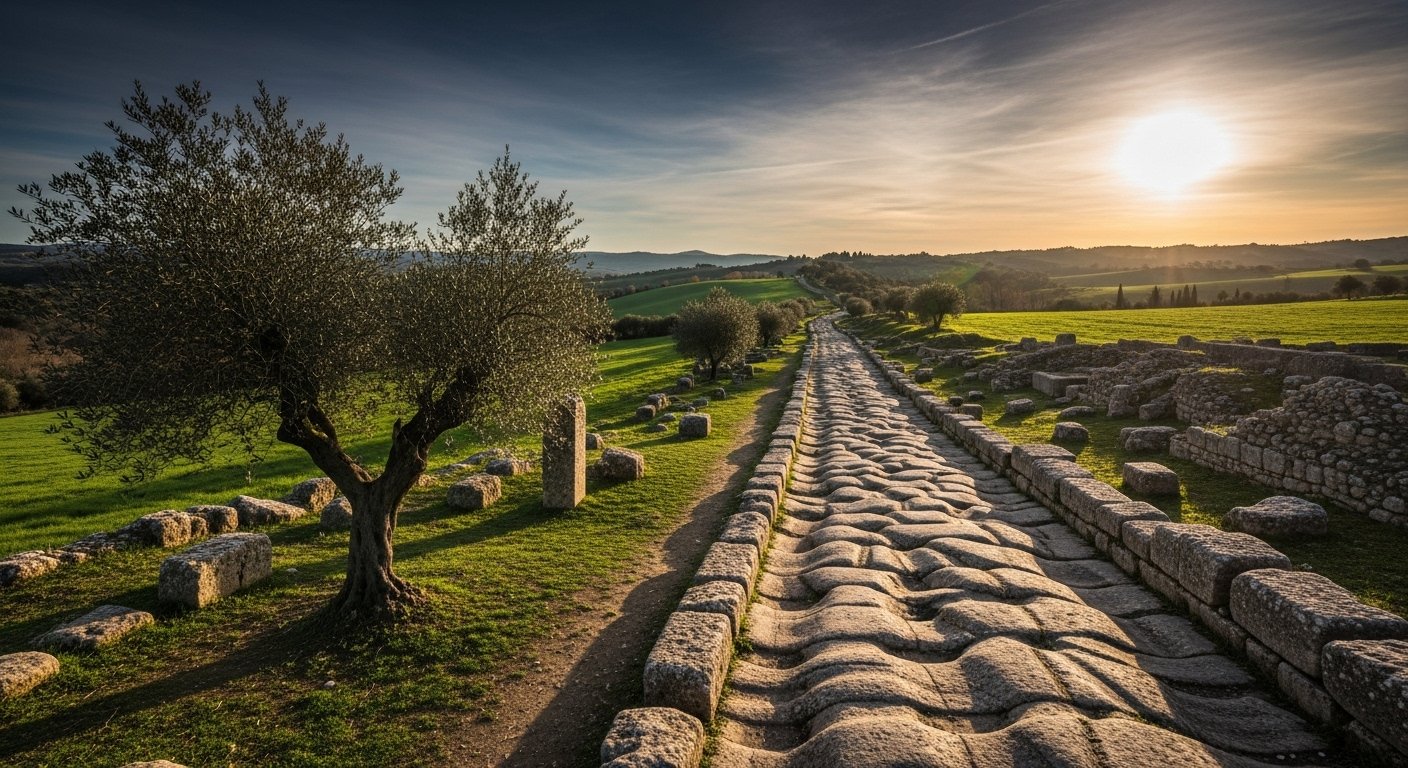
The Cesta Roman, or Roman road system, stands as one of the most remarkable achievements of ancient civilization. Built over two thousand years ago, these roads formed the backbone of the Roman Empire, enabling military dominance, economic growth, cultural exchange, and administrative control across vast territories. Even today, many modern European roads follow the paths first laid out by Roman engineers, proving the durability and vision behind this extraordinary infrastructure.
Origins of the Cesta Roman
The development of Roman roads began in the early Roman Republic, around the 4th century BCE. As Rome expanded beyond the Italian Peninsula, the need for reliable transportation became critical. Roads were not merely pathways for travel; they were strategic tools
to connect conquered lands directly to Rome.
One of the earliest and most famous examples is the Via Appia, constructed in 312 BCE. It linked Rome to southern Italy and became a model for future roads. From this point onward, road construction became a state priority, funded and maintained by the Roman government.
Engineering Excellence and Construction Techniques
What set the Cesta Roman apart from other ancient road systems was its advanced engineering. Roman roads were built to last, often surviving centuries of use, natural erosion, and even modern traffic.
A typical Roman road consisted of multiple layers:
-
Statumen: Large stones forming a solid foundation
-
Rudus: A layer of crushed stone mixed with lime
-
Nucleus: Fine gravel or sand creating a smooth surface
-
Summum dorsum: Paving stones carefully fitted together
This layered approach ensured excellent drainage and stability. Roads were slightly curved at the center, allowing rainwater to flow off the sides, preventing damage. Milestones were placed at regular intervals, displaying distances and sometimes the name of the emperor who ordered construction or repairs.
Military Power and Strategic Importance
The primary purpose of the Cesta Roman was military efficiency. Roman legions needed to move quickly to suppress revolts, defend borders, or launch campaigns. The famous saying “All roads lead to Rome” reflects how roads were designed to radiate outward from the capital, ensuring rapid deployment of troops.
Thanks to this network, Roman armies could travel up to 30 kilometers a day, an impressive feat for the ancient world. Roads also allowed for the swift transport of weapons, supplies, and communication messages, strengthening Rome’s control over distant provinces.
Economic Growth and Trade Networks
Beyond military use, Roman roads played a crucial role in economic expansion. They connected farms, mines, ports, and cities, facilitating the movement of goods such as grain, olive oil, wine, metals, and textiles.
Merchants relied on the Cesta Roman to reach markets across Europe, North Africa, and the Middle East. Trade routes flourished, cities grew along major roads, and local economies became part of a larger imperial system. Inns, rest stations (mansiones), and horse-changing posts (mutationes) were established to support travelers and traders.
Cultural Exchange and Communication
Roman roads were not just physical structures; they were channels of culture and ideas. Philosophies, languages, religious beliefs, and artistic styles traveled along these routes. Latin spread across Europe largely because roads enabled Roman officials, soldiers, and settlers to move freely.
The postal system (cursus publicus) used the road network to deliver official messages efficiently. This allowed emperors to govern distant provinces with greater authority and awareness, uniting diverse regions under a shared administrative system.
Urban Planning and City Development
Cities in the Roman world were often planned around road intersections. Major roads led directly into forums, markets, and administrative centers. This design reinforced Rome’s authority and encouraged urban development.
Many modern European cities, including those in Italy, France, Spain, and the United Kingdom, still reflect Roman road layouts. Streets that appear oddly straight or unusually wide often trace their origins back to the Cesta Roman.
Maintenance and Administration
Maintaining such an extensive network required strong organization. Roman officials known as curatores viarum were responsible for road upkeep. Local communities also contributed labor and resources, ensuring that roads remained usable.
Repairs were frequent, and inscriptions on milestones documented restoration efforts. This commitment to maintenance explains why many Roman roads outlasted the empire itself.
Decline After the Roman Empire
With the fall of the Western Roman Empire in the 5th century CE, centralized maintenance declined. Roads fell into disrepair as political fragmentation, invasions, and economic instability took hold.
However, the roads never truly disappeared. Medieval travelers, traders, and armies continued to use them, often repairing sections as needed. In many cases, Roman roads became the foundations for medieval and modern highways.
Legacy in the Modern World
The influence of the Cesta Roman is still visible today. Modern road engineering borrows heavily from Roman principles such as layered construction, drainage systems, and standardized measurements. The idea that infrastructure strengthens political unity and economic growth is a lesson modern governments continue to apply.
Tourists can still walk along preserved Roman roads, experiencing firsthand the scale and ambition of ancient engineering. Archaeological discoveries continue to reveal new details about how these roads were built and used.
Conclusion
The Cesta Roman – Ancient Roman Road Legacy represents far more than stone and gravel. It symbolizes vision, organization, and the understanding that connectivity is the foundation of power and progress. Through their roads, the Romans united vast territories, strengthened economies, spread culture, and shaped the future of infrastructure development.
Even centuries after the fall of Rome, these roads remind us that well-planned systems can transcend time. The Cesta Roman is not only a relic of the past but a lasting lesson in how thoughtful engineering and strategic planning can change the course of history