 By Emma Ellis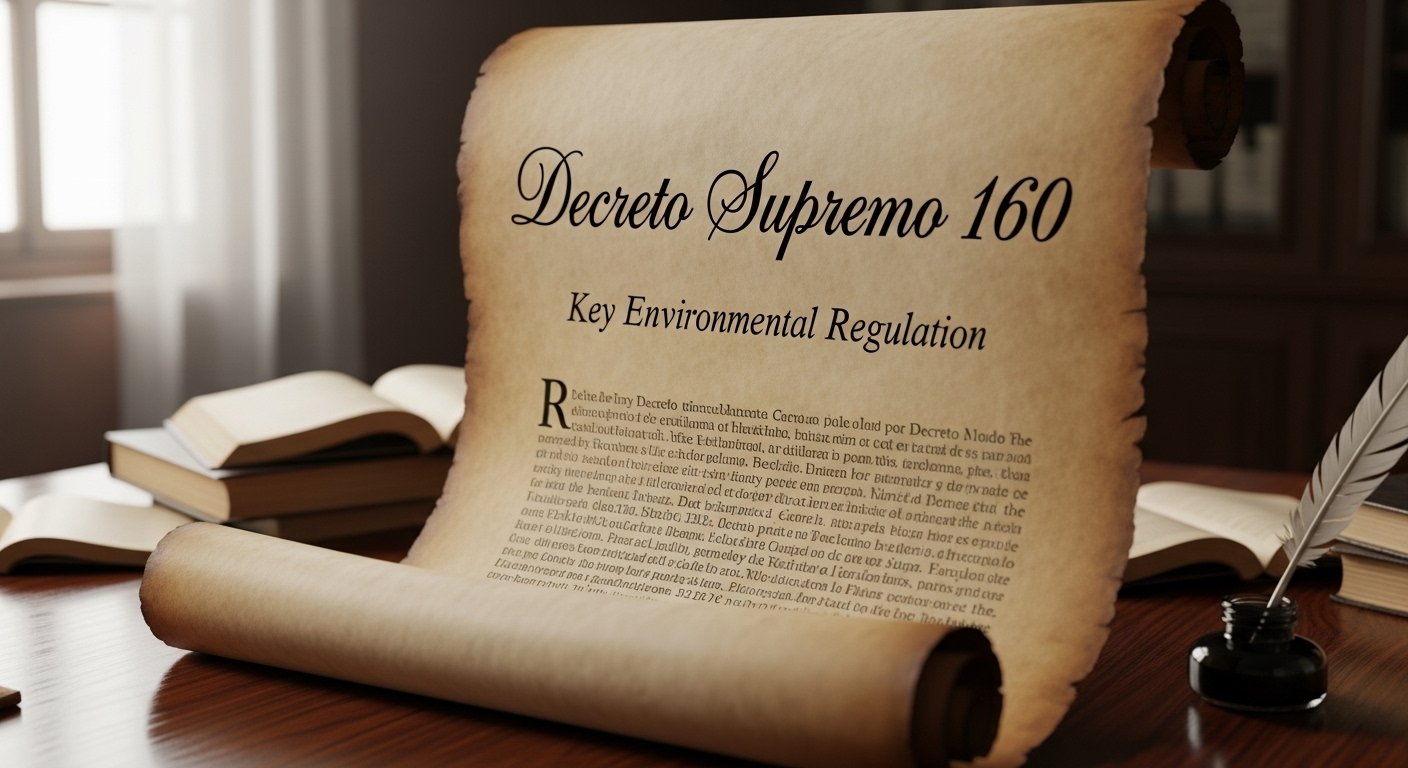
Decreto Supremo 160 is widely regarded as a cornerstone of modern environmental regulation. As a supreme decree, it holds strong legal authority and plays a critical role in shaping how governments manage environmental protection alongside economic and social development. Its primary function is to establish clear, enforceable rules that guide how projects with potential environmental impacts are planned, evaluated, approved, and monitored.
This article explores Decreto Supremo 160 as a key environmental regulation, examining its objectives, regulatory structure, implementation mechanisms, and long-term importance for sustainable development and legal certainty.
What Is Decreto Supremo 160?
A decreto supremo is a high-level executive regulation issued to implement and detail the application of existing laws. Decreto Supremo 160 operates within this framework by translating environmental legislation into practical rules and procedures.
Rather than creating new environmental principles, it focuses on:
-
Defining how environmental rules are applied
-
Establishing administrative procedures
-
Clarifying obligations for project developers
-
Assigning responsibilities to public authorities
Through this role, Decreto Supremo 160 becomes a bridge between environmental law and real-world decision-making.
Core Objectives of the Regulation
The main objective of Decreto Supremo 160 is to ensure that environmental considerations are integrated into development planning from the earliest stages. It seeks to prevent environmental damage rather than merely responding to it after harm has occurred.
Key objectives include:
-
Protecting natural resources and ecosystems
-
Preventing or reducing negative environmental impacts
-
Promoting responsible and sustainable development
-
Ensuring transparency and accountability
-
Providing legal certainty for both authorities and developers
By clearly outlining procedures and standards, the regulation reduces uncertainty and improves the quality of environmental decisions.
Environmental Impact Assessment as a Central Tool
One of the most important features of Decreto Supremo 160 is its focus on environmental impact assessment (EIA). The EIA process is designed to identify, predict, and evaluate the environmental effects of proposed projects before they are approved or built.
Under this regulation, projects that may affect the environment must undergo an evaluation process proportional to their potential impact. This ensures that environmental risks are understood and addressed early, when changes are still feasible and cost-effective.
Projects Covered by the Regulation
Decreto Supremo 160 typically applies to projects that have the potential to significantly alter the environment. These often include:
-
Infrastructure such as roads, ports, and energy facilities
-
Industrial and manufacturing operations
-
Mining and resource extraction activities
-
Waste management and water treatment projects
-
Large-scale urban or land-use developments
By clearly defining which activities are subject to review, the regulation prevents harmful projects from avoiding environmental oversight.
Levels of Environmental Evaluation
The regulation usually establishes different levels of environmental assessment based on the scale and risk of a project. Lower-impact projects may be subject to simplified procedures, while high-risk or complex projects require comprehensive studies.
This proportional approach:
-
Avoids unnecessary regulatory burden
-
Focuses resources on higher-risk activities
-
Improves administrative efficiency
-
Encourages compliance by making requirements clearer
Such differentiation is essential for balancing environmental protection with economic practicality.
Public Participation and Access to Information
A defining strength of Decreto Supremo 160 is its emphasis on transparency and public participation. Environmental decisions often affect local communities directly, making their involvement essential.
The regulation typically provides mechanisms for:
-
Public access to environmental information
-
Submission of observations or comments
-
Consideration of community concerns in final decisions
This participatory approach improves trust in institutions, reduces social conflict, and enhances the overall quality of environmental governance.
Institutional Roles and Responsibilities
Effective environmental regulation depends on clearly defined institutional roles. Decreto Supremo 160 outlines the responsibilities of authorities involved in:
-
Reviewing environmental documentation
-
Approving or rejecting projects
-
Monitoring compliance during implementation
-
Enforcing corrective measures or sanctions
Clear mandates help prevent overlap, delays, and gaps in enforcement, leading to more consistent regulatory outcomes.
Compliance, Monitoring, and Enforcement
Approval under Decreto Supremo 160 is not the end of environmental responsibility. Once a project is authorized, developers are usually required to comply with specific conditions designed to prevent or mitigate environmental harm.
The regulation supports:
-
Ongoing environmental monitoring
-
Periodic reporting by project operators
-
Inspections by regulatory authorities
If violations occur, enforcement mechanisms may include fines, corrective orders, suspension of activities, or revocation of approvals. These measures reinforce the seriousness of environmental obligations.
Legal Certainty and Predictability
From a legal perspective, Decreto Supremo 160 provides a structured and predictable framework. Developers benefit from knowing:
-
When environmental approval is required
-
What documentation must be prepared
-
How decisions are made
-
What standards apply
For authorities, the regulation offers a clear legal basis for decisions, making them more defensible in administrative or judicial review.
Contribution to Sustainable Development
Decreto Supremo 160 is not designed to halt development, but to guide it responsibly. By requiring early environmental analysis and informed decision-making, it supports development that meets present needs without compromising future generations.
The regulation encourages:
-
Environmentally responsible project design
-
Adoption of mitigation and compensation measures
-
Integration of environmental, social, and economic factors
This balanced approach reflects modern principles of sustainability.
Challenges in Implementation
Like all environmental regulations, Decreto Supremo 160 faces practical challenges. Common issues include:
-
Lengthy evaluation timelines
-
Technical complexity of environmental studies
-
Limited institutional capacity
-
Tension between economic urgency and environmental protection
Addressing these challenges often requires continuous regulatory updates, improved technical guidance, and stronger institutional coordination.
Long-Term Significance
Over time, Decreto Supremo 160 has become more than a procedural rule—it represents a shift in how environmental responsibility is understood. It reinforces the idea that environmental protection is not optional, but an essential component of lawful and sustainable development.
Its influence extends beyond administration into:
-
Environmental policy development
-
Legal interpretation and case law
-
Public awareness of environmental rights and duties
Conclusion
Decreto Supremo 160 – Key Environmental Regulation stands as a vital instrument for modern environmental governance. By establishing clear procedures, promoting transparency, and enforcing accountability, it ensures that development decisions consider environmental consequences in a structured and lawful manner.
Its enduring value lies in balancing growth with protection, certainty with flexibility, and authority with participation. As environmental challenges continue to grow, the principles embedded in Decreto Supremo 160 remain essential for achieving sustainable, responsible, and legally sound development.